
In part one, we got characters moving through grass and leaving a trail that slowly settles. I wanted combat to leave a mark too. A sword swing should feel different from a spell, and a projectile should affect the grass along its path rather than only where it lands.
All of these reactions use the same interaction field as footsteps. It records a disturbance, then the grass reads it and bends before settling back. The interesting part was giving each action its own shape and timing.
The shape of a swing
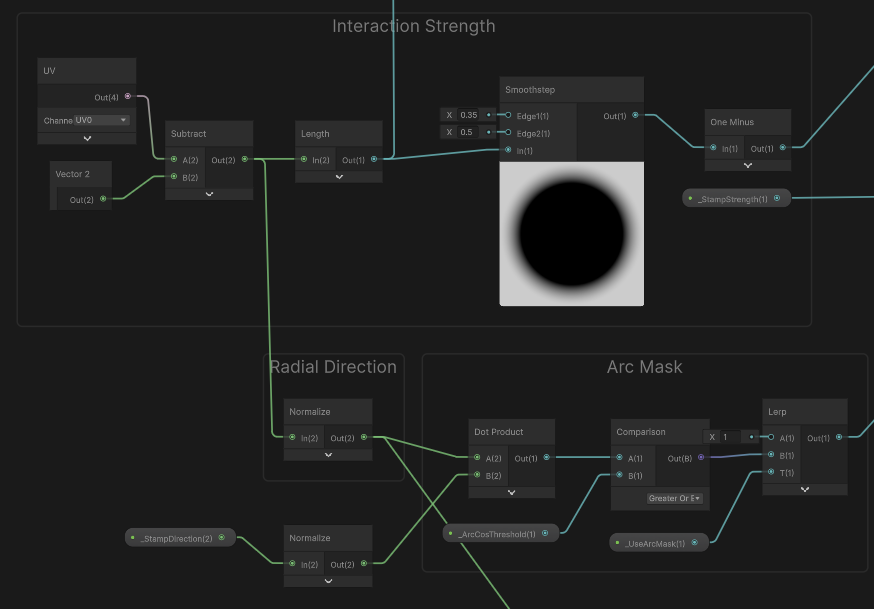
A normal melee attack now sends a wave through an arc in front of the character. The direction of the swing matters: grass to the side reacts, while grass behind the character doesn't get the same broad push. I tied it to the attack animation so the movement starts with the blade rather than at an arbitrary point in the attack.
Blade Dance is different. Its skill effect sends a radial wave around the warrior, disturbing a wider patch of grass. You can see both reactions in the clip above.
A spell has a journey
For the mage, casting sends a radial wave out from the character. The projectile then leaves a moving disturbance as it travels through the grass. When it hits, another radial wave spreads from the impact. It gives the action a beginning, a path and an end that you can read on the ground.
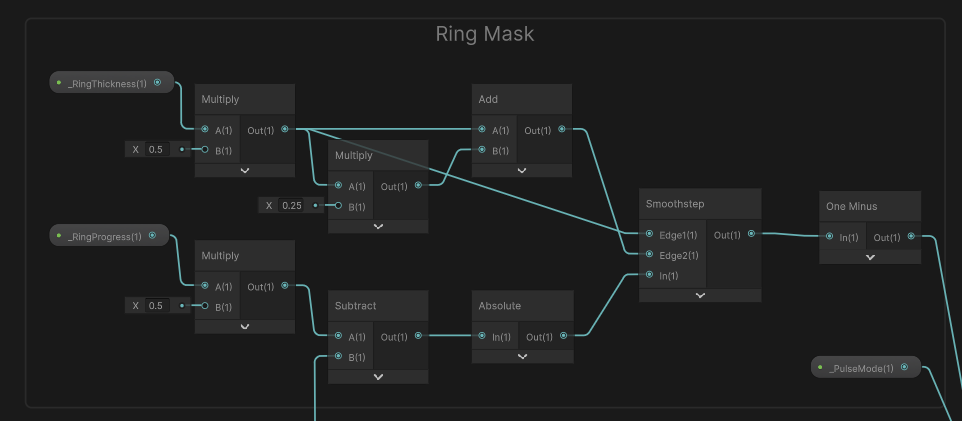
For the expanding waves, the draw shader uses a ring that changes over time. It lets the response travel outwards instead of making the whole area bend at once.
Why keep working on grass?
These are small details, but they help connect combat to the world around it. They could also become useful clues in a fight: movement, a cast or a projectile may disturb grass even when the character responsible is hard to see. I'm still tuning how strong and readable each response should be, especially when several things happen together.