
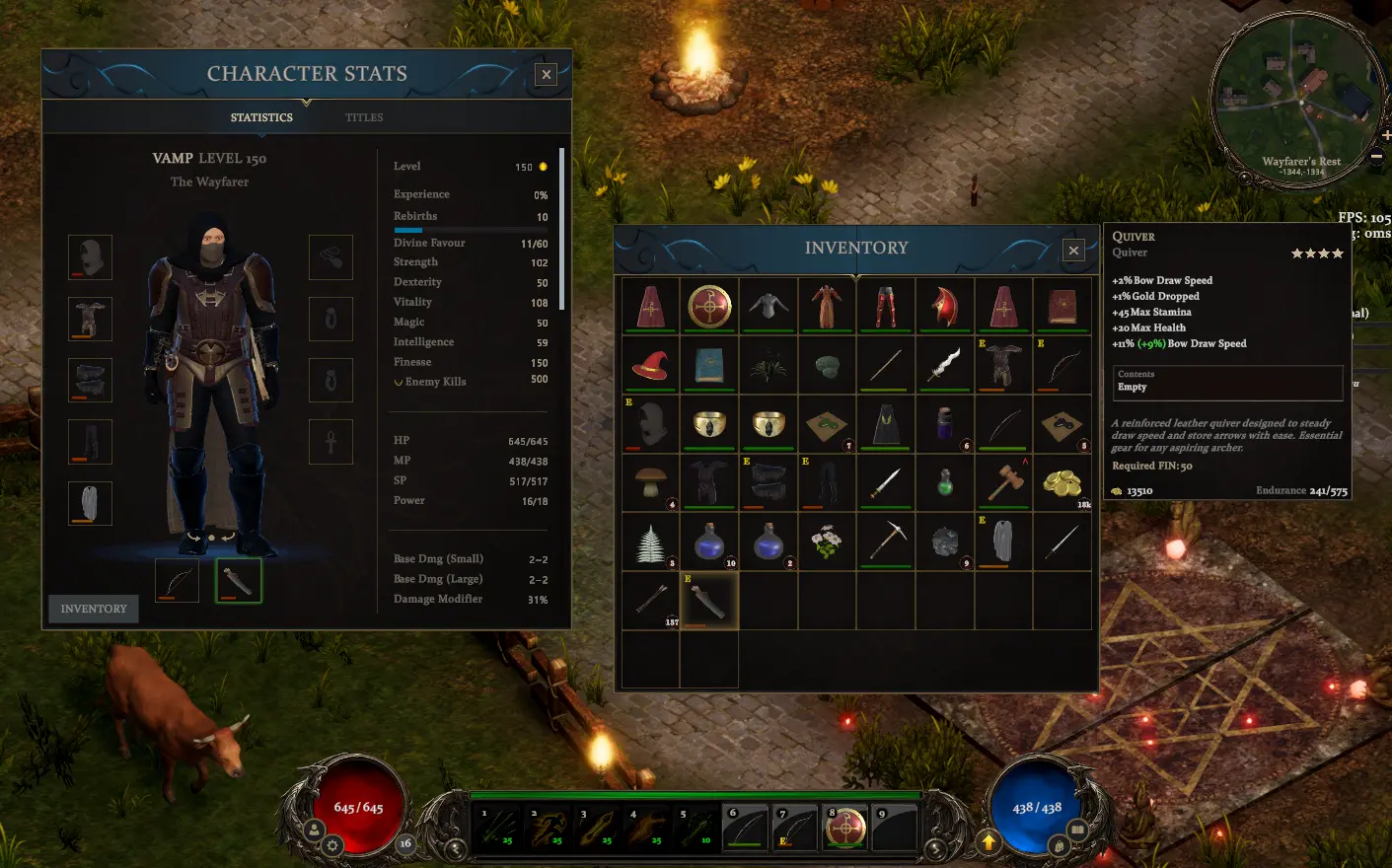
For Helrift's economy to work, a player needs to be able to find a material, make something useful with it and find someone who wants it. We also need to watch how much gold the world creates.
Everything needs a source
Materials enter Helrift through creatures, gathering, mining, chopping, fishing, vendors and other world interactions. Recipes may depend on ingredients that have already been processed. Item quality can depend on the quality available from those sources.
If a recipe exists but one ingredient cannot be obtained, the whole chain breaks. If high-quality equipment exists but high-quality materials do not, progression becomes theoretical. Mapping these relationships is essential, so our development tools analyse recipes, loot tables, interactables, vendors and the locations in which sources appear.
Value needs a destination
An item is only valuable when somebody has a reason to use, trade or risk it. Crafted equipment should support meaningful character builds. Consumables should solve real problems. Resources should connect to research and production rather than simply filling storage.
Those destinations must also remain understandable. A player should be able to learn what an ingredient is for and work backwards from an equipment goal towards the places and activities that make it possible.
Gold requires restraint
Every sale to an NPC creates currency. When high-tier items or unusually strong stat combinations sell for too much, a small number of drops can flood the economy with gold. Prices then stop communicating effort and ordinary rewards lose their meaning.
We are analysing expected gold per kill, item sell values and the effect of quality and generated stats. The aim is not to eliminate profitable discoveries. It is to ensure that rewards remain proportionate and that no single repeatable route overwhelms the rest of the economy.
Geography creates movement
Where resources appear matters as much as their numbers. Safer regions can support learning and reliable supply. Rarer opportunities further afield give players reasons to travel, trade and work together, while the possibility of meeting others brings risk and conflict into the journey.
A rare ore matters because someone needs it for a recipe. Its location matters because getting it may mean crossing into contested ground. Those links between source, use and place are what we are working to make visible.