
During the playtest, some players ran up to an enemy ready for a fight and bowed instead. A confident opening move. Unfortunately, it was not the one they had in mind.
They hadn’t realised how to switch into combat mode. From their point of view, they were trying to attack. The character had other ideas about the appropriate level of courtesy.
Looking ready for a fight
That was useful feedback about how clearly Helrift communicates its controls and character state. If players need to stop and work out why their attack has become a greeting, the difference between peace and combat needs to be easier to recognise.
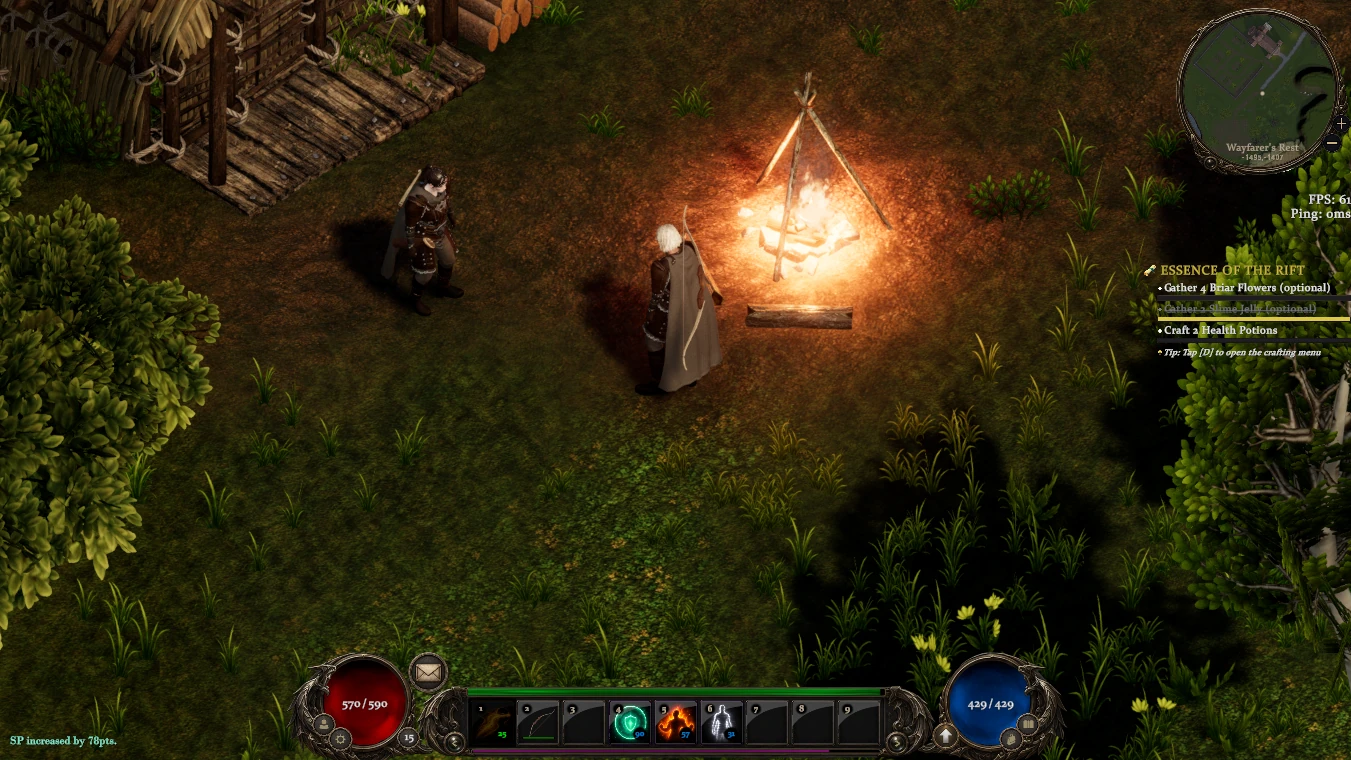
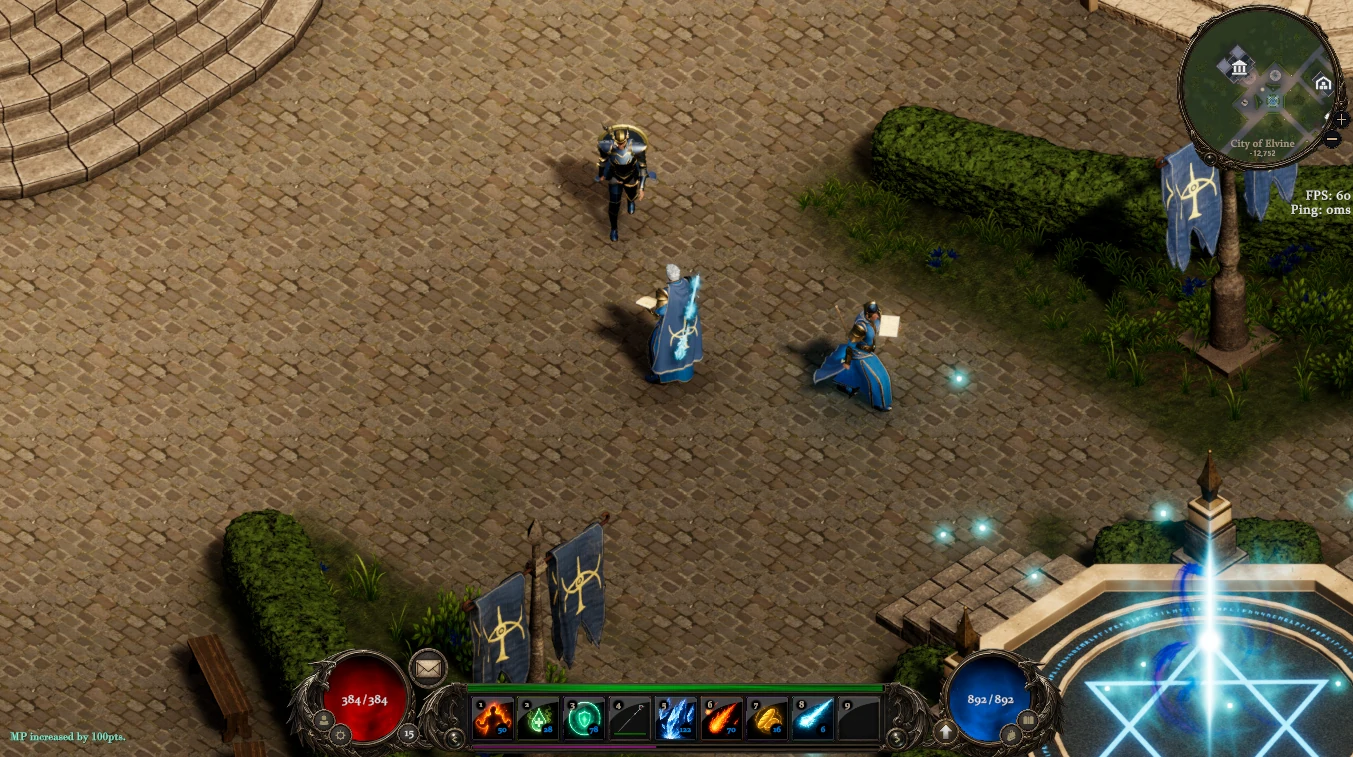
The equipment changes now make that difference visible on the character. In peace mode, equipment is stowed: weapons, bows and shields sit on the back, while books and focuses sit at the hip. Equipment returns to the hands for combat and the actions that need it.
The intention is that you can glance at your character and see whether you’re ready to fight. Whether that cue is enough, and whether players understand how to switch modes, still needs checking in the next playtest.
First, make room for the equipment
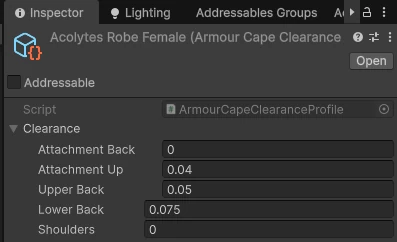
Making peace mode easier to recognise started with the cape. Before putting more equipment on the character’s back, I needed to sort out how the cape sat over different armour combinations. Shared clearance profiles gave me a way to adjust that fit, then carry those offsets into the equipment placement.
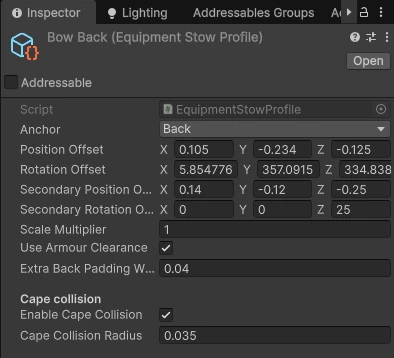
From there, profiles for different weapon types let me tune how items sit when stowed, including their position on the back or hip. A sword, a shield and a book need different placement, and the armour and cape around them also affect how much room there is.
The cape fitting work also handles the Dynamic Bone colliders at runtime and excludes a hauberk that is hidden beneath a robe from the clearance calculation. The point of these profiles is to make the fit adjustable as equipment combinations change. This is merged and working in-game. As new weapons and armour combinations arrive, I can tune their profiles rather than start the fitting work again. Capes remain impressively good at finding the one place you forgot to check.
A bow with unexpected consequences
There was another wrinkle along the way. Bowing shared an attack flag, so the first version of the stowing behaviour brought the equipment back into the character’s hands during the bow. Apparently even a polite greeting needed to be armed.
That has now been corrected: a peace-mode bow keeps equipment stowed, while a combat attack uses the equipment in hand. It was a useful reminder that an animation flag can mean more than its name suggests.
Working now, with room for more
The cape profiles, equipment stowing and bowing correction are all merged and working in-game. Future fitting tweaks will be for additional weapons and armour combinations. I also want to see whether new players recognise peace mode sooner and understand how to enter combat without being told after their first accidental bow.
These changes give the character a clearer visual cue. The next playtest will tell us how well that cue works alongside the controls and onboarding. Ideally, the next slime will receive fewer formal introductions.
This is a short detour into character presentation before The Balancing Act continues with Part 2, Gathering Our Things.